Turmoil from Religious Change

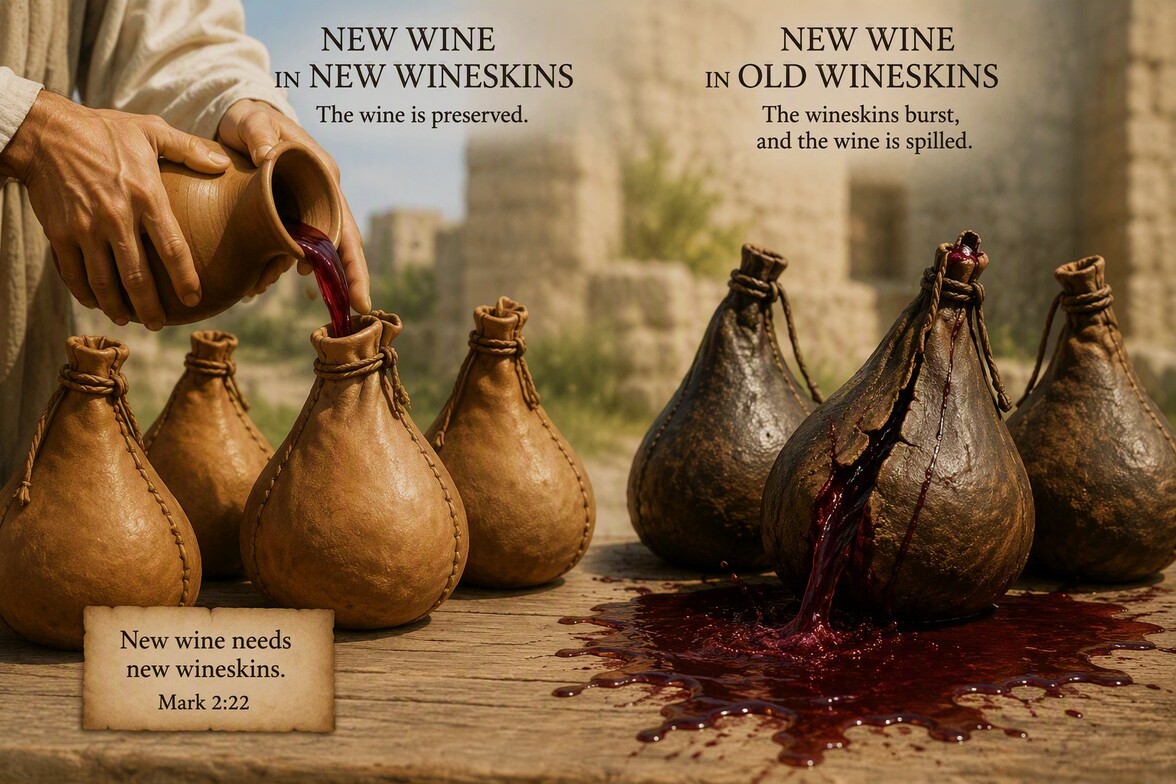
Jesus’ disciples did not always follow their heritage’s traditional external religious observances. So religious leaders demanded that Jesus explain. From this question and many other criticisms, Jesus well knew that religious change generates discomfort, controversy and division. Yet he said, "New wine must be put into new wineskins." Mark 2:22.
What can we learn from Jesus’ answer to this challenge or from other examples of religious change?
The Reading Circle will wrestle with this issue via Zoom on August 18 starting at 7 PM EDT when it discusses The Voices of Morebath: Reformation and Rebellion in an English Village (2001) by Eamon Duffy, Professor of the History of Christianity at Cambridge University. The book traces the dramatic religious swings experienced by Morebath, a village in southwestern England, during the reigns of Queens Mary I and Elizabeth I, and the central role of the village’s long-serving religious leader, Christopher Trychay.
The people of Morebath welcomed Mary I's accession in 1553 as the end of the turmoil, expense, and religious disruption imposed during the preceding reign of Protestant king Edward VI. They linked the return of their traditional worship practices and church structures to renewed social stability. These functioned as a community system built on charity, shared obligations, ritual, and local identity.
But Mary's death in 1558 brought another abrupt reversal as the new Queen Elizabeth re-imposed Protestant worship. Because resistance was no longer practical, Morebath’s villagers complied – but only externally. They did not experience the Reformation primarily as a battle of theological ideas. They intertwined religious beliefs with community, memory, charity, local identity, and social order. The Reformation changed not only doctrine but the purpose of communal life. Before the Reformation, parishioners gave money for candles, altars, images, masses, and prayers for the dead. After the Reformation, the theological reason for such gifts disappeared and churches placed greater emphasis on charity and practical concerns. Traditional devotional practices declined but some rhythms of traditional religion survived.
The village’s religious leader, Trychay, helped the village to adjust gradually to the changed religious circumstances. Although he would have preferred not to change from his parish’s traditional practices, he modified his teaching to conform to Protestant demands. He valued the continuity of parish life more than ideological conflict.
The Reading Circle is one of our congregation’s small groups. An overview of these is at Small Groups | Arlington Church of Christ. Do not miss the opportunity they provide to deepen your faith and understanding!