In Christ Jesus, God's People Rise as a Holy Temple

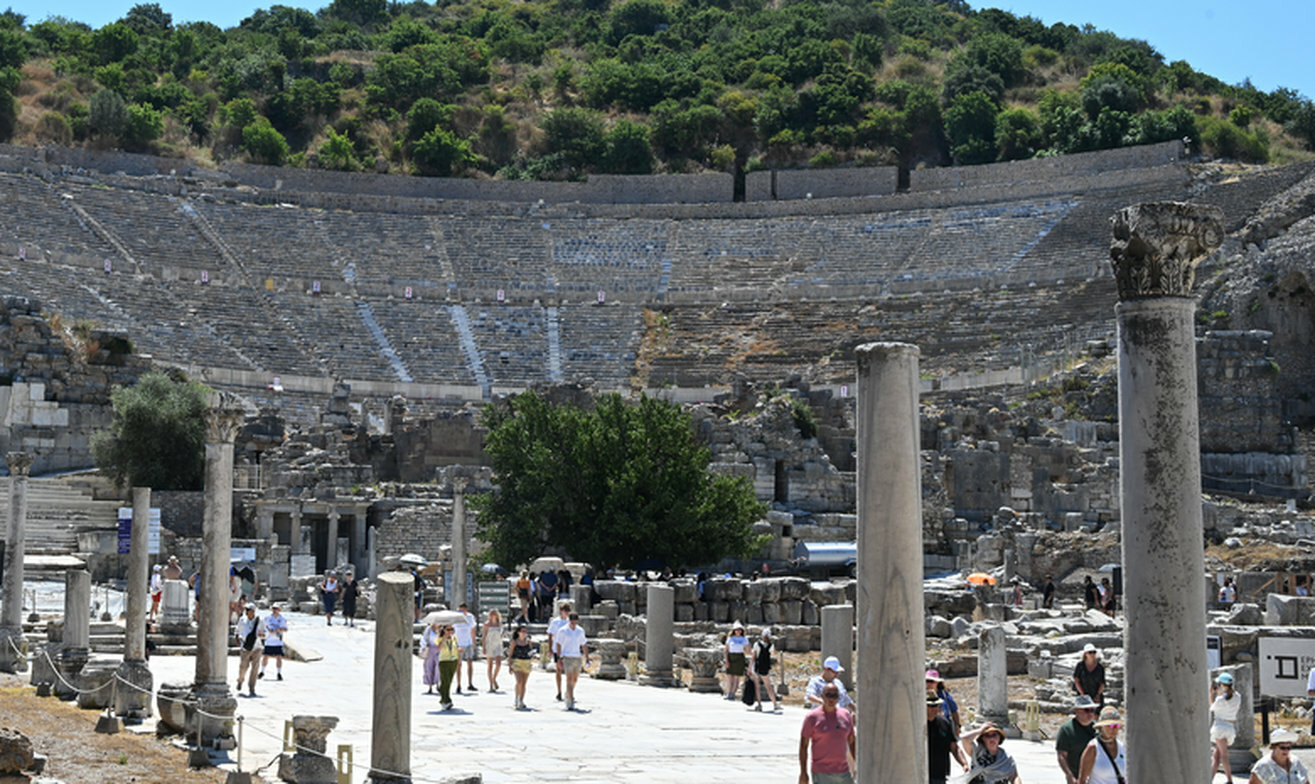
“[Y]ou are no longer strangers and aliens, but you are fellow citizens with the saints and also members of the household of God, built upon the foundation of the apostles and prophets, with Christ Jesus himself as the cornerstone; in him the whole structure is joined together and grows into a holy temple in the Lord.” Eph. 2: 19-21
In Christian Life in the Greco-Roman City (2026), Jason Borges explains how the physical and social world of the Greco-Roman city provided the setting and shaped the identity, values, politics, and economics of early Christianity. Early Christians regularly encountered marketplaces, temples, baths, theaters, prisons, libraries, and cemeteries. They used their familiarity with these places to imagine a new vision of community, worship, identity, and citizenship that reshaped the ancient world. Chapters in this book focus on specific structures and their influence on New Testament passages. Below are some examples.
Ancient cities’ economic, political, judicial, and social life revolved around their marketplaces or town squares. In his teaching, Jesus frequently used marketplace imagery. Matt. 11:16-19. Paul conducted ministry and faced opposition in public squares throughout the Roman world, including Philippi, Athens, Corinth, and Ephesus. Acts 16:19-22; 17:17; 18:12-17; 19:23-41. (The photo above, taken in June 2026, depicts the theatre and marketplace of Ephesus.) The judgment seat, where magistrates rendered public verdicts, became a powerful metaphor for divine judgment. Ro. 14:10; 2 Cor. 5:10. Likewise, the marketplace verb “to buy” underlies New Testament teaching about redemption, as believers are “bought with a price” through Christ's sacrifice. 1 Cor. 6:20; 7:23; Rev. 5:9.
In his chapter on temples, Borges highlights the contrast between Christianity and Greco-Roman religion. Pagan worship centered on sacrifices, rituals, and maintaining peace with the gods. Early Christians, however, built no temples, offered no animal sacrifices, and met primarily in homes. Rom. 16:5; Col. 4:15; Philem. 2. The New Testament distinguishes between the exterior temple complex and its inner sanctuary where God dwells. When Paul describes believers as God's temple, 1 Cor. 3:16-17; 6:19; Eph. 2:19-22, he uses the word for the latter, teaching that God's presence now resides among his people rather than in sacred buildings. This theology also explains Christian rejection of participation in pagan temple meals. Acts 15:20, 29; 1 Cor. 8:1-13; 10:14-22.
Unlike pagan religions’ primary reliance on rituals, early Christians were distinctively committed to books and learning. Churches preserved and circulated apostolic writings, Col. 4:16; 1 Thess. 5:27, read Scripture publicly, 1 Tim. 4:13, and quickly adopted the codex (book form) instead of scrolls. Paul's request for “the books and especially the parchments,” 2 Tim. 4:13, illustrates the importance of texts in Christian ministry. Similarly, exiled John emphasized the command to write and preserve his apocalyptic message. Rev. 1:11; 22:18-19.
On November 21, 2026 (a Saturday!), starting at 7:00 PM Eastern time, the Reading Circle will discuss via Zoom this book with its author (an American scholar who lives in Türkiye near sites his book discusses). The Reading Circle is one of our congregation’s small groups. An overview of these is at Small Groups | Arlington Church of Christ. Do not miss the opportunity they provide to deepen your faith and understanding!