God’s Homecoming as the Central Theme of Scripture

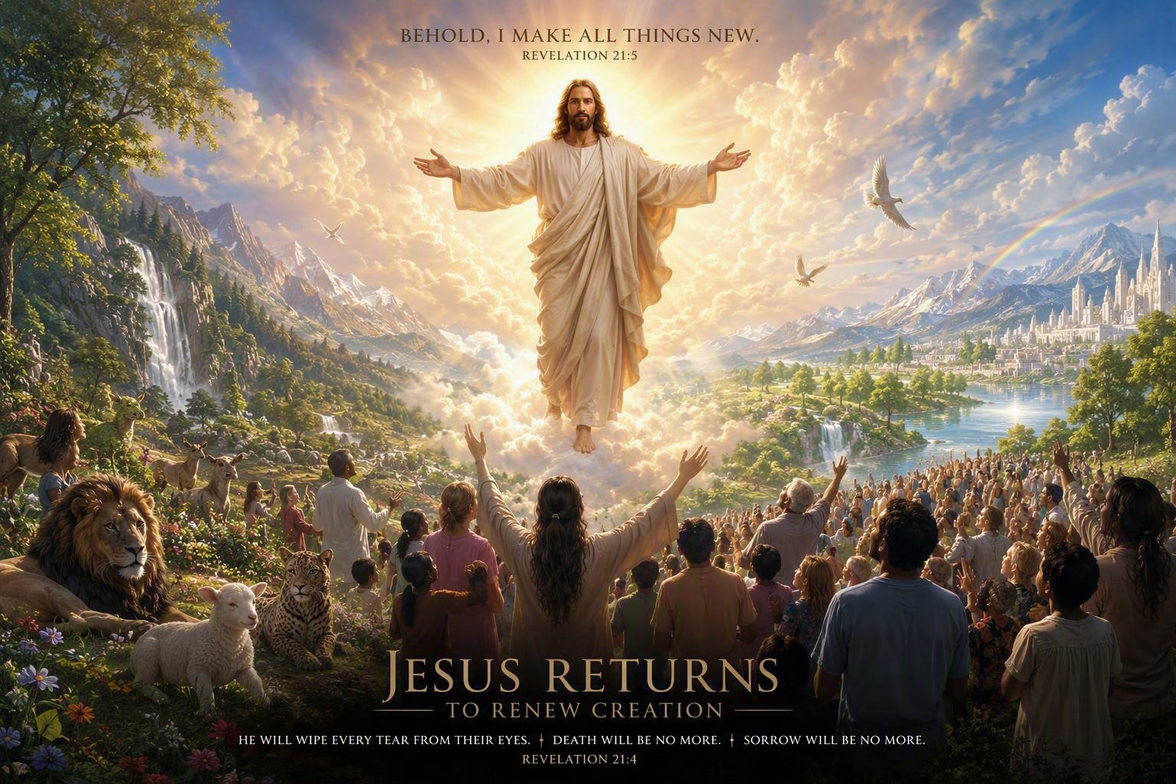
“See, the home of God is among mortals. He will dwell with them; they will be his peoples, and God himself will be with them and be their God.” Rev. 21:3.
How does this verse square with your understanding of what will happen when Jesus returns? And with your concept of heaven? Do other Biblical passages, e.g., Ro. 8:23 (“we ourselves, who have the first fruits of the Spirit, groan inwardly while we wait for adoption, the redemption of our bodies”), also suggest that God's ultimate purpose is to redeem, reclaim, and renew the earth as a place where He will dwell with his beloved human creatures? Beginning at 7:00 PM EDT on September 22, 2026, the Reading Circle will explore these and related questions when we discuss N. T. Wright, God's Homecoming: The Forgotten Promise of Future Renewal (2025).
In this book Wright contends that the Bible's overarching story is not about human beings going to heaven after death, but about God coming to dwell with humanity and renewing all creation. The Bible consistently affirms the goodness of creation and God's purpose to redeem, reclaim, and renew it. Western Christianity has missed this fundamental concept by following Platonic philosophy, which views the material world as inferior and regards salvation as the liberation of the soul into a higher spiritual realm. By contrast, the culmination of the biblical story is not the escape of souls from the material world but the arrival of God's presence in a restored creation: "the homecoming of God."
The Old Testament shows God's desire is to dwell among his people. The tabernacle and later the temple function as anticipations of the final union of heaven and earth. The laws, sacrifices, and covenant arrangements were not primarily designed to enable people to go to God, but to make it possible for the holy God to live in the midst of sinful people. Israel's prophets repeatedly announce both the renewal of creation and the personal return of God to Zion.
The New Testament declares that these promises are fulfilled in Jesus Christ. The Gospels portray Jesus not merely as a teacher of personal salvation but as the embodiment of God's long-awaited return to his people. Jesus is Emmanuel, "God with us," Matt. 1:23, the true temple where heaven and earth meet. His ministry, death, and resurrection inaugurate the new creation promised by the prophets. The gift of the Holy Spirit continues this divine homecoming. At Pentecost, God's presence fills believers just as God's glory once filled the tabernacle and temple. The church thus becomes God's dwelling place, a preview of the future new creation. Empowered by the Spirit, believers participate in God's restorative mission through worship, justice, healing, reconciliation, care for the poor, education, and the pursuit of peace.
The author also challenges traditional views of death and the afterlife. The New Testament's primary hope is not an immortal soul living forever in heaven but the resurrection of the body within a renewed creation. While believers who die are "with Christ," Phil. 1:23, in an intermediate state, this is temporary, awaiting the final resurrection and the renewal of all things. Passages often interpreted as teaching a heavenly destiny are better understood within this broader biblical framework.
The book further argues that the church's multicultural unity is one of the clearest signs of God's homecoming. By overcoming ethnic, cultural, and social barriers through Christ and the Spirit, the church becomes a living demonstration of the new creation already at work in the world.
The Reading Circle is one of our congregation’s small groups. An overview of these is at Small Groups | Arlington Church of Christ. Do not miss the opportunity they provide to deepen your faith and understanding!