Fathers and Their Lost Sons, Sometimes Found

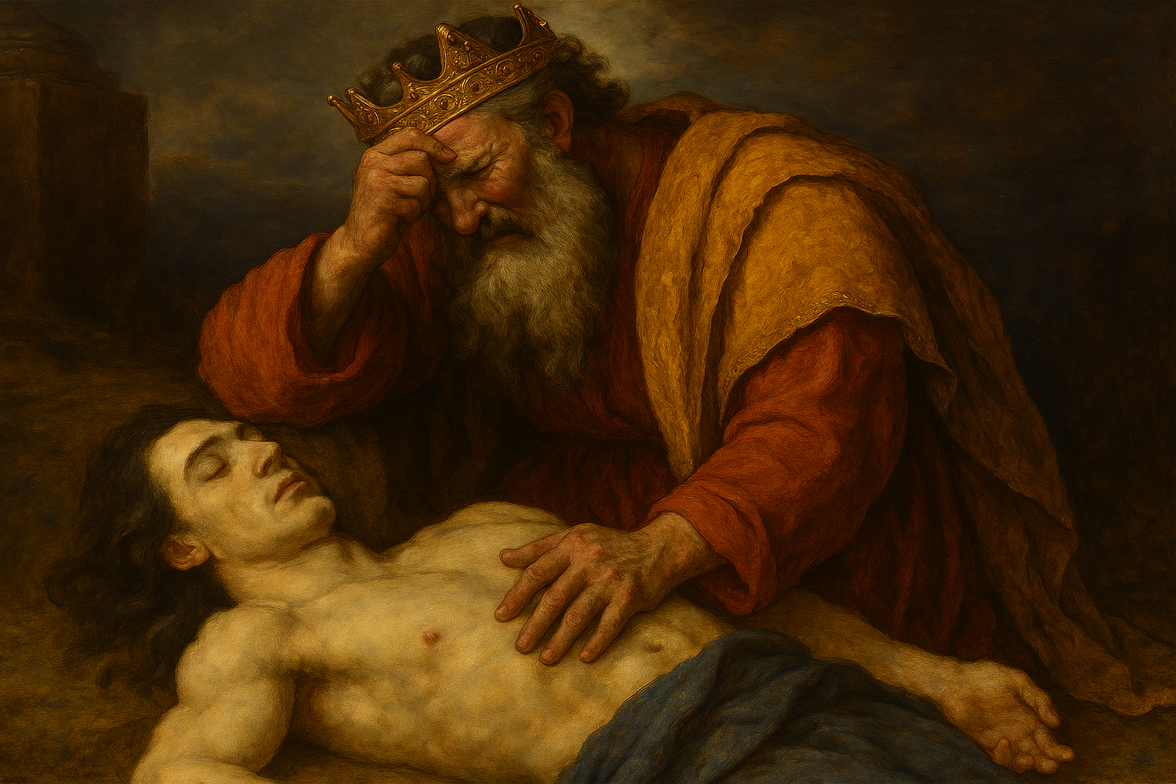
Lost sons feature in Biblical stories. Consider the events involving Israel’s King David that end with the king shaken, weeping and crying: ‘O my son Absalom! My son, my son Absalom!’” 2 Sam. 18:33. And recall Jesus’ parable of a compassionate father who tells his jealous other son, “‘This brother of yours was dead and is alive again; he was lost and is found.’” Lu. 15:32.
On February 10, 2026, starting at 7 PM Eastern time, the Reading Circle (RC) plans to discuss the theme of lost sons and their grieving fathers. The Biblical stories cited above provide the theological backdrop as RC explores Alan Paton’s novel, Cry, the Beloved Country (1948).
This book describes South Africa during apartheid: how families have scattered and moral order collapsed in a sort of collective Fall. Oppression, exploitation and fear yield a climate rife with personal sin: theft, violence and prostitution. The story focuses on the intertwined lives of Stephen Kumalo and James Jarvis. Kumalo, the elderly Black leader of a rural church, lives near Jarvis, a White landowner. Kumalo’s faith and hope are tested when he travels to Johannesburg to search for his lost son Absalom. Absalom’s murder of Jarvis’s son Arthur transforms Jarvis’s life.
Framing South Africa’s racial crisis not only as political but profoundly spiritual, the novel calls readers to repentance, reconciliation, and sacrificial love. Kumalo confesses to Jarvis that Absalom killed Arthur. Jarvis grieves yet ultimately responds not with vengeance but grace and generosity. Their relationship becomes a living parable of reconciliation — fragile but real — a path to healing a divided nation. Kumalo’s compassion for his sister, his son, and even the girl carrying Absalom’s child reflects Christlike mercy.
Frequently echoing Biblical themes, Cry the Beloved Country provides inspirational words. Here are a few: “The truth is that our civilization is not Christian; it is a tragic compound of great ideal and fearful practice, of high assurance and desperate anxiety, of loving charity and fearful clutching of possessions.” “[M]en were afraid, with a fear that was deep, deep in the heart, a fear so deep that they hid their kindness, or brought it out with fierceness and anger, and hid it behind fierce and frowning eyes.” “[S]uch fear could not be cast out, but by love.” “[K]indness and love can pay for pain and suffering.”
RC will “gather” via Zoom at this link. Information about this small group and others in our congregation is at Small Groups | Arlington Church of Christ. I encourage your participation, including in RC even if you have not read the book.