Considering Long-Past Generations of Believers and Their Effect on Us

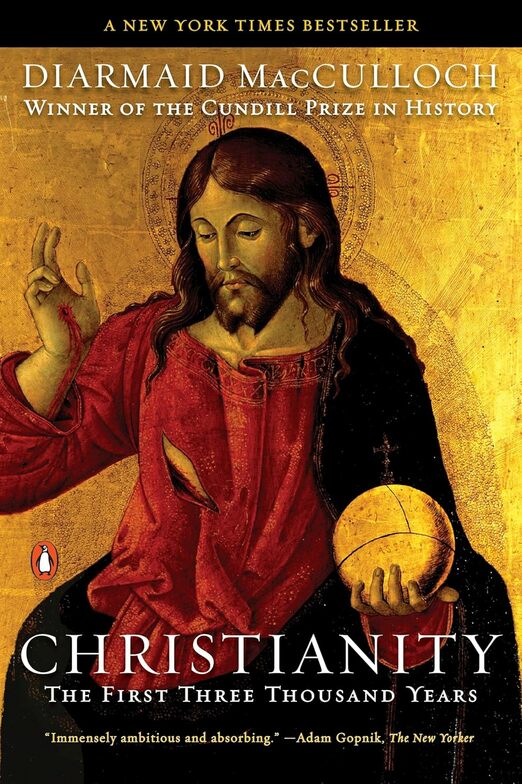
“Remember the days of old; consider the generations long past.” In his very last directive to God’s people, Moses explained that following these words would help them thrive. Deut. 32:7, 44-47.
Recall Peter’s first sermon declaring that God had made Jesus of Nazareth “Lord and Messiah.” Acts 2:36. But after that, approximately 70 generations of people have lived. Throughout this period, people have believed Peter’s assertion. What do you know about these long-past generations?
Specifically, what did believers in these days of old think about how God interacted with them and how they should relate to each other? Where did they live? How and why did their beliefs change over time? What influences have their ideas had on ours? The Reading Circle will explore these and adjacent questions at 7 PM on May 12, 2026, when we discuss parts V and VI of A History of Christianity: The First Three Thousand Years (2010) by Diarmaid MacCulloch.
Part V traces how Eastern (Orthodox) Christianity developed during 451–1800 C.E. from a faith closely fused to the imperial project for shifting the headquarters of the Roman Empire into Constantinople (today’s Istanbul). This shift created a durable religious civilization (Eastern Orthodoxy) centered on icons, monasticism, and intimate union with God (rather than a theology grounded on deemed acquittal for sins). After Muslim invaders conquered Constantinople, believers in this region re-centered themselves, including in Slavic worlds, especially Russia, where religious practices and autocracy intertwined in a new “Third Rome.” Orthodox artistic and musical traditions diverged from forms dominant in western Europe. For example, in Orthodox assemblies, worshippers continued a cappella chant; the pipe organ did not gain wide acceptance.
Part VI explores the long unravelling of medieval Western (Latin) Christian unity from 1300–1800 C.E. During these years believers made competing attempts to redefine the “true Church,” and overlapping crises—institutional, theological, cultural, and political—culminated in the Reformation, renewal in Roman Catholicism, and the global spread of Christianity. The initially dominant Christian authorities imagined communion as a reenactment of Jesus’ death, developed the concept of purgatory and benefitted financially by charging for supposed early release from this punishment and for prayers for the dead. Various groups questioned these ideas, promoted scripture as the supreme authority for doctrinal matters and broadened understanding about the Bible by translating its original languages (Greek and Hebrew) into languages spoken by contemporary local people. Some taught that right standing before God depended on believers’ faith and God’s imputing righteous to them. Some rejected infant baptism and Church–state alliances. In response, Roman Catholicism sought renewal through interior mysticism, sacramental availability and confessional discipline. First Catholics (especially in Africa and Latin America), then Protestants (particularly in North America) pursued missionary work to increase the number accepting the religious ideas they espoused.
Reading Circle is one of our congregation’s small groups. An overview of these is at Small Groups | Arlington Church of Christ. Do not miss the opportunity they provide to deepen your faith and understanding!